
Not currently scheduled
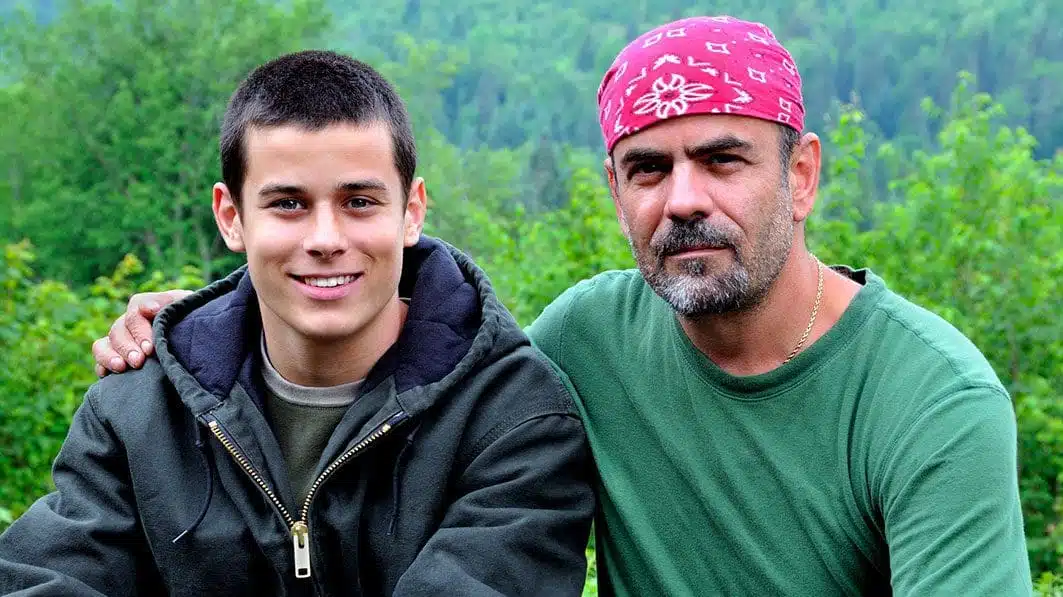
Father & Son Initiation
A Rite of Passage Between Father, Son & the Emerging Man
A father cannot walk his son's path for him. But he can stand beside him at the threshold — and help him cross it consciously, rather than leaving him to cross it alone.
BeginAt the threshold
A passage that belongs to both of you
Father and son initiation is not a workshop a boy is sent to and returns from improved. It is a passage that father and son enter together, in nature, in the presence of other men — and that each of them leaves changed.
Somewhere between thirteen and eighteen, a boy begins to leave boyhood. His body changes without asking permission. His world widens. His need for his father shifts from protection toward recognition. In most of the cultures that came before ours, this moment was not left to chance. It was marked. It was witnessed. Men gathered, and something was said out loud about who this young person was becoming.
Much of that has quietly fallen away. Young men now cross into manhood surrounded by screens, algorithms and a culture that offers them a narrow and often distorted picture of what a man is. Many arrive at adulthood having never once been formally seen, challenged and acknowledged by the men around them.
Our father and son initiation work exists to meet that absence directly — not with performance or bravado, but with challenge, ceremony, time in the natural world, and the honest attention of men who have done their own work.
A boy will cross into manhood whether or not anyone marks it. That is precisely the problem. The premise of this work
Why the passage is marked
Why rites of passage still matter
A boy's body will mature whether or not anyone marks it. Biology handles that on its own. What biology cannot do is tell a young man what the change means, what is now being asked of him, or who is standing behind him as he grows into it.
That is the work of a rite of passage. Not to manufacture manhood, but to mark, witness and give meaning to a threshold inside a much longer process of becoming.
We want to be careful here, because this territory attracts overstatement. A weekend in the mountains does not turn a boy into a man. Nothing does that in four days. What an initiation can do is name the threshold clearly, make the crossing conscious, and make sure the young man is not crossing it unseen. The years that follow do the rest.
A young man who has been formally recognised by his father and by a circle of men carries something different into his twenties than one who was left to work it out from the culture around him.

Two crossings, one passage
There are two thresholds here, not one
A father son rite of passage is usually described as something that happens to the son. In practice, both men are crossing something — at the same time, in the same place, in front of each other.
The son
From boyhood toward young manhood
He is being asked to step out from under the roof of childhood without losing his connection to it. To meet difficulty without collapsing or performing. To discover that his pain, his fear and his tenderness are not disqualifications from manhood but part of its raw material.
And to be seen — really seen — by his father and by men who are not his father, at an age when being seen is both what he most wants and what he most fears.
The father
From raising a boy toward standing beside a man
He is being asked to loosen a grip that has kept his son safe for over a decade. To stop managing and start witnessing. To let his son struggle in front of him without rescuing him, and to let his son see him as a man — not only as a father.
For many fathers this is the harder crossing, because it touches what they did and did not receive from their own fathers.
Underneath both crossings sits the question of lineage. What did you receive from your father? What did you not receive, and go looking for elsewhere? What are you carrying forward without having chosen it? And what, knowing all of that, do you now want to hand your son deliberately?
Most men have never been asked those questions out loud, let alone in front of their son. Initiation is one of the few settings where that conversation becomes possible — and where it lands differently, because the land, the fire and the other men are holding it with you. If you want to sit with this territory first, our writing on the father wound and why boys need men is a good place to begin.
The father's part
The role of the father
You do not need to arrive as a finished man. That is not the requirement, and it never was.
Fathers often approach this work quietly worried that they are unqualified — that they lost their temper too often, missed too much, were absent in ways they cannot undo, or simply have no idea what they are doing. None of that disqualifies you. A father who arrives honest about his limits gives his son something far more useful than a father who arrives performing certainty.
What is actually asked of you is more specific, and more difficult.
-
I
Witness
Watch your son meet something hard and stay present without stepping in to fix it, explain it or soften it for him.
-
II
Challenge
Hold a real edge for him out of love rather than frustration — and know the difference in your own body.
-
III
Be seen
Let your son encounter you as a man with a history, a wound and a heart, not only as the authority he has known since birth.
-
IV
Relate differently
Begin, consciously, the long shift from instructing him to standing beside him.
A word about who "the father" can be. Not every young man has a father available to him, and not every man who fathers a boy is his biological father. Stepfathers, grandfathers, uncles, godfathers, coaches and long-standing male mentors have all stood in this role and stood in it well. What matters is that the man is genuinely in the young man's life and willing to be changed by the work himself. The relationship at the centre of this page is father and son — and that centre holds whether the man arrived by blood, by marriage, or by showing up year after year.
Beyond the two of you
A circle of men
A father cannot initiate his son alone.
This is not a criticism of fathers. It is a structural fact that older cultures understood well. The bond between father and son is too close, too loaded, and too full of shared history for the father to be the only man in the room at a moment like this.
Sons need to be recognised by men who are not obliged to love them. When an unrelated man looks a fifteen-year-old in the eye and tells him what he saw in him that day, it lands somewhere a father's words cannot reach. Not because it means more — because it means something different. It tells him he has been noticed by the wider world of men, not only by the one who raised him.
Fathers need the circle too. Doing this alongside other fathers, some further along than you, some struggling with exactly what you are struggling with, breaks the isolation most men carry around parenting. Very few fathers get to say out loud what they fear about their sons, or about themselves as fathers. Here, they do.
This is why the work is held by a group of men rather than by a single facilitator — and why the community of men around Embodied Masculine matters as much as any individual retreat.
Before the first fire
Preparing for father & son initiation
Initiation does not begin at the ceremony. It begins the moment you both agree to leave ordinary life for a few days.
Something shifts as soon as the decision is made. Phones will be handed over. Work will be left unfinished. School, sport, friendships and the usual rhythm of the household will carry on without either of you. That temporary removal is not an inconvenience around the edges of the work — it is the first movement of the work itself. You cannot cross a threshold while keeping one foot inside the room you are leaving.
What the son is preparing for
Being without his usual footing: no screens, no group chat, no familiar audience, no easy exit from discomfort. Some resistance beforehand is normal and not a sign that he shouldn't come. Reluctance and readiness look almost identical at that age.
What the father is preparing for
Not being in charge. Being a participant rather than a parent for a few days. Letting other men hold his son. And looking honestly at his own lineage before he is asked about it in front of a fire — a conversation most men benefit from starting quietly, in advance, with themselves.
If we do not initiate the youth, they will burn down the village just to feel the heat. African proverb
How the work is done
Challenge, nature & embodiment
A teenage boy can hold an intelligent conversation about resilience, courage or emotion and remain entirely untouched by it. The nervous system does not learn from discussion. It learns from experience — from the moment his legs are tired, the light is going, and he discovers he has more in him than he assumed.
So the work is embodied. Movement, breath, physical challenge, time outdoors, silence, cold air, fire, and long hours without the devices that normally regulate his mood for him. Nature is not scenery here. It is indifferent to his image, immune to his performance, and therefore honest with him in a way almost nothing else in his life is.
What challenge is — and what it is not
Challenge here functions as a mirror. It shows a young man how he meets difficulty: whether he pushes through, checks out, gets funny, gets angry, asks for help, or quietly gives up. Those responses are the material. Seeing them clearly, while being supported rather than judged, is what changes them.
Challenge is never humiliation. It is not hazing, domination, breaking someone down, manufactured toughness, or making a boy prove his masculinity to a group of men. Any version of "men's work" that does that has confused hardness with maturity. Practices are invitational, facilitated by trained men, and paced with attention to what each young man can actually meet.
You cannot talk a young man into knowing himself. He has to meet himself somewhere his words don't help him.
The path of initiation
The movements of the path
Initiation follows a shape. Not a schedule of activities, but a sequence a young man moves through — and, in a father and son container, one his father moves through beside him.
I
The wound
II
It is not about you
III
A new community
IV
Death & rebirth
V
Ceremony & celebration
The order matters more than the timing. A young man cannot be celebrated into manhood before he has met what hurts.
-
I
The wound
At this age a young man's sense of himself tends to swing between grandiosity and quiet self-contempt. The way back to solid ground runs through his pain rather than around it. The first work is helping him identify what hurts, sit with it without numbing or fleeing, express it freely, and feel it in his body while being witnessed and held by men who do not flinch.
We work with the unprocessed charge underneath the pain until what it has to teach him becomes clear. As Rumi wrote, "The wound is the place where the Light enters you."
-
II
It is not about you
Once he has made real contact with his own wound, empathy follows almost on its own, and with it the realisation that he is not the centre of the universe. Most young men are raised inside a story about their own specialness and spend years chasing it without satisfaction. They are taught, as we all were, that happiness lives outside them: buy this, act this way, be wanted.
When a young man touches his pain and simultaneously stops being the centre of his own world, space opens for something more essential to come through. As Richard Rohr, who has written extensively on male initiation, puts it: once you know your life is not about you, you can trust that your life is your message. Even at this age, that seed takes. He begins to tell the difference between the chattering mind and the quieter flame at the centre of his chest.
-
III
A new community
This puts him on the path, and he is not on it alone. He meets other young men who have been through the same days, seen him at his rawest, and been seen in return. Who a young man spends his time with shapes the direction of his life more than almost any other factor at that age. Bonds formed in this kind of container tend to outlast the days that made them.
The fathers form their own bonds in parallel — often with men they would never otherwise have met.
-
IV
Death & rebirth
The final movement brings death honestly into the room. As Don Juan told Carlos Castaneda, your death is always near. Everything is passing and being reborn at the same time. We walk young men through this so that they may be birthed anew — with a clearer sense of interconnectedness and of what their own life is asking of them.
Practically, it means looking at what has to end. What parts of the boy have to be laid down so the young man can step forward into the life he actually wants.
-
V
Ceremony & celebration
After the hardest day of the retreat, the arc culminates in an initiation ceremony and a celebration. The celebration is not an afterthought. Joy, food, music and the visible delight of the older men are part of the transmission: this is what it looks like when men are glad you are among them.
Adapted from Richard Rohr, Adam's Return: The Five Promises of Male Initiation (The Crossroad Publishing Company, 2004), 62–64, 66.
The ceremony
What the initiation entails
The initiation ceremony is intentionally private in nature. We do not describe it publicly, and there is a reason for that: a ceremony a young man can research and rehearse beforehand is no longer a threshold. It becomes a performance he has already prepared for.
What we will say is this. It is designed to connect him on a cellular level to the deepest part of himself, and to bring him into communion with the Great Mother, Nature, the Higher Self, God — or however you choose to call Her.
Fathers are part of it. That is the piece that tends to stay with men for years afterward.

What passes between you
The father & son bond
The first intention of this work is the young man. The second — and it is close behind — is to bring father and son genuinely closer.
Fathers and sons are deliberately separated at points during the days and brought back together at others, for shared practice, shared meals and shared ceremony. The separation matters as much as the reunion. A son who has spent hours in the company of other men returns to his father slightly differently. A father who has spent hours in the company of other fathers receives him differently.
Somewhere in that rhythm, a son begins to see his father as a man like him: someone with fear, history, longing and unfinished business. That recognition is the quiet centre of the whole thing. Something is finally said that has been waiting years to be said.
What is passed from father to son is passed either way — consciously or not. This is simply an opportunity to choose it.

After the fire goes out
Integration
The most common failure in this kind of work is not what happens during the days. It is what happens two weeks later, when the intensity has faded, the phone is back, and both father and son quietly return to the roles they held before they left. The experience becomes a good memory rather than a change.
Integration is how that is avoided, and it is mostly unglamorous. Fathers and sons are supported in leaving with something concrete: specific agreements between them, a clearer sense of what each is now responsible for, and a way of talking to each other that survives contact with an ordinary Tuesday. Not a list of rules — a small number of things both of them have actually agreed to.
Both of them will find that things surface weeks and months later — grief, anger, tenderness, memories that had been sitting untouched. That is normal, and it is part of the passage rather than evidence that something went wrong. Having a father and son who both have language for it is the difference.
The ceremony marks the threshold. The life afterward gives it meaning.
-
Responsibility follows recognition
For the son, integration looks like being given more real weight to carry, and being held to it. If nothing about his standing in the household changes, the ceremony quietly contradicts itself.
-
The father keeps relating differently
Consulting him, letting him carry weight, letting him fail without intervening, continuing to say out loud what he sees in him. Most fathers find this is the harder half.
-
The conversation stays open
What was said at the fire has to remain sayable at the kitchen table. That is the whole test.
The long arc
Continuing the path
Initiation is not a single transformational event that resolves a young man's development. It is one marked point on a path that both father and son remain on for the rest of their lives. For the father, that path has a direction. Over years, one question gradually gives way to another.
How do I raise this boy?
How do I stand beside this emerging man?
That shift does not happen in a weekend either. It happens in hundreds of small moments over a decade — every time a father chooses to consult rather than instruct, to trust rather than manage, to let his son be more capable than is comfortable.
For the son, the path continues into the wider territory of initiation for teenage boys and young men, and eventually into men's work of his own. And for many fathers, this is where their own initiatory work begins in earnest — because standing beside an emerging man asks you to have done something with your own lineage.
Initiation, in our understanding, is not a door you pass through once. It is a way of living that keeps asking you to cross.
In their own words
Voices from this work
"Young men are being raised in a society that does not support their well being. From porn culture being the template for intimacy to apathy in engaging with life and various forms of numbing or addiction, they are losing their connection to themselves, their families and what it means to be a man in today's society. This work is designed to interrupt those patterns — and to create true connection and healing between fathers and sons."
"I felt like I was a part of something real and valuable. The practices shared with us are powerful and took me deep every time. I saw the other men evolve and grow in truly inspiring ways. Overall it's an experience I really honor and value, that I feel a lot of gratitude for. To anyone who is searching for a program with real potency to commit to: You found it."
Archive · Past retreats
How previous Father & Son Initiations were held
Historical record — not a current offering
Everything below is written in the past tense because it describes retreats that have already taken place. It is kept on this page as a record of the work Embodied Masculine has actually held, so you can see the shape it took. None of it is scheduled, bookable or available for registration. Dates, location, group size and structure would all be set afresh for any future Father & Son Initiation.
- Form it took
- Four days, three nights
- Circle it held
- Twelve fathers, twelve sons
- Land it was held on
- The mountains above Ojai, California
- Who attended
- Teenage sons, with their father or a standing father figure
The intentions we held at the time
- To strengthen the bond between fathers and sons.
- To initiate young men out of a self-centred paradigm and into the reality of interconnection and community.
- To help young men work with and transform fire energy, so that it was neither destructive to themselves nor to others.
- To cultivate a deeper appreciation and awe of the feminine.
- To deepen connection to self and to the natural world.
What those days included
- Time entirely away from screens, in nature, with other young men and their fathers.
- Physical, mental and spiritual challenge, paced and facilitated.
- Practices for holding and transforming aggressive and destructive energy.
- Space for unexpressed wounds to be spoken and witnessed.
- An introduction to masculine archetypal energies and how they shape motivation and action.
- An introduction to shadow work, at an age-appropriate depth.
- Nightly campfire council.
- Sons powerfully seen and heard in relationship with their fathers.
- Farm-to-table organic meals, prepared on site.
- Initiation and fire ceremony on the final night.
To be unambiguous: this section is a record of past retreats, not an offer. There is no current Father & Son Initiation to register for. If and when one is scheduled, it will be announced separately.
Related work
Elsewhere on this path
Looking ahead
Future Father & Son Initiations
Father & Son Initiation is not currently scheduled.
That is a statement about the calendar, not about the work. Fathers and sons have crossed this threshold with us in the mountains, and the questions this page describes — lineage, witnessing, challenge, what a man hands his son — run through everything Embodied Masculine does.
We continue to hold initiatory work for men and for young men, and father-son initiation remains territory we stand for. When a future Father & Son Initiation is ready, it will be announced.
A father cannot walk his son's path for him. But he can stand beside him at the threshold.
Be notified of future Father & Son Initiations
If future Father & Son Initiation experiences are announced, we will let you know before anything is made public. Leave your details below.
We will use your details only to tell you about Father & Son Initiation and closely related initiatory work. You can unsubscribe at any time.
Have a question about this work? Contact Embodied Masculine.
Fathers who want to begin now, without waiting for a father and son retreat, are welcome in our ongoing men's circles and programmes. In our experience, a father's own work is rarely wasted preparation.